What Your Balance Sheet Is Telling You (And Why Most Owners Never Look at It)
September 7, 2026 | By: Dan Ralphs
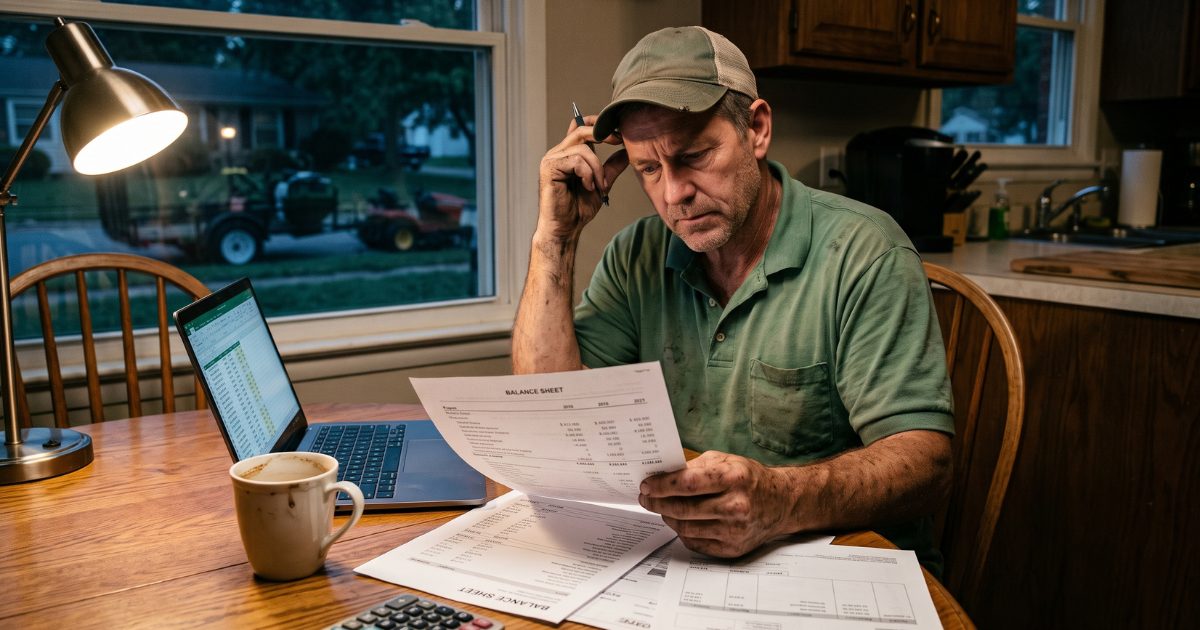
Your balance sheet is a snapshot of what your business owns, what it owes, and what’s actually yours — as of one specific date. Unlike your P&L, which measures performance over a period of time, this report tells you your financial position right now.
The Three Sections, In Plain Terms
Assets: what you own — cash, equipment, accounts receivable, vehicles
Liabilities: what you owe — loans, credit lines, unpaid bills, equipment financing
Equity: what’s actually yours once liabilities are subtracted from assets
Assets always equal liabilities plus equity. That’s not accounting trivia — it’s the built-in check that tells you the report is accurate.
Why Most Owners Skip It
The P&L feels more relevant day-to-day because it shows revenue and profit — the numbers owners are used to chasing. The balance sheet feels static by comparison. But ignoring it means missing early signs of financial strain that never show up on a P&L at all.
The Ratios Worth Knowing
Current ratio (current assets ÷ current liabilities): tells you whether you can cover short-term obligations. Below 1.0 means your near-term bills outpace what you can quickly access to pay them.
Debt-to-equity ratio (total liabilities ÷ equity): tells you how leveraged your business is. A rising ratio over time means debt is growing faster than your ownership stake.
Warning Signs Worth Catching Early
Liabilities climbing quarter over quarter with no matching growth in assets
Equity shrinking even in a year your P&L showed a profit (often a sign of large owner draws or debt paydown outpacing earnings)
Accounts receivable growing faster than revenue, meaning you’re selling more but collecting slower
Quick Answers
How often should I review my balance sheet? Monthly, alongside your P&L — not just once a year at tax time.
Can a business be profitable on paper but still be in trouble according to the balance sheet? Yes. A healthy P&L combined with shrinking equity or a low current ratio is exactly the kind of gap this report is built to catch.
Do I need an accountant to read my balance sheet, or can I do it myself? You can absolutely learn to read the basics yourself — the goal of this article is exactly that. An accountant becomes valuable when you need help interpreting a trend or making a strategic decision based on it.
Want a walkthrough of what your balance sheet is actually telling you?
SHARE THIS
Have questions about our bookkeeping services
or fit for your business?
Grow Smarter with Expert Help

© Copyrights by The Lawn Care Books.
All Rights Reserved.
© Copyrights by The Lawn Care Books. All Rights Reserved.
Grow Smarter with Expert Help