Buy vs. Lease: The Real Financial Math Behind Equipment Decisions
July 20, 2026 | By: Dan Ralphs
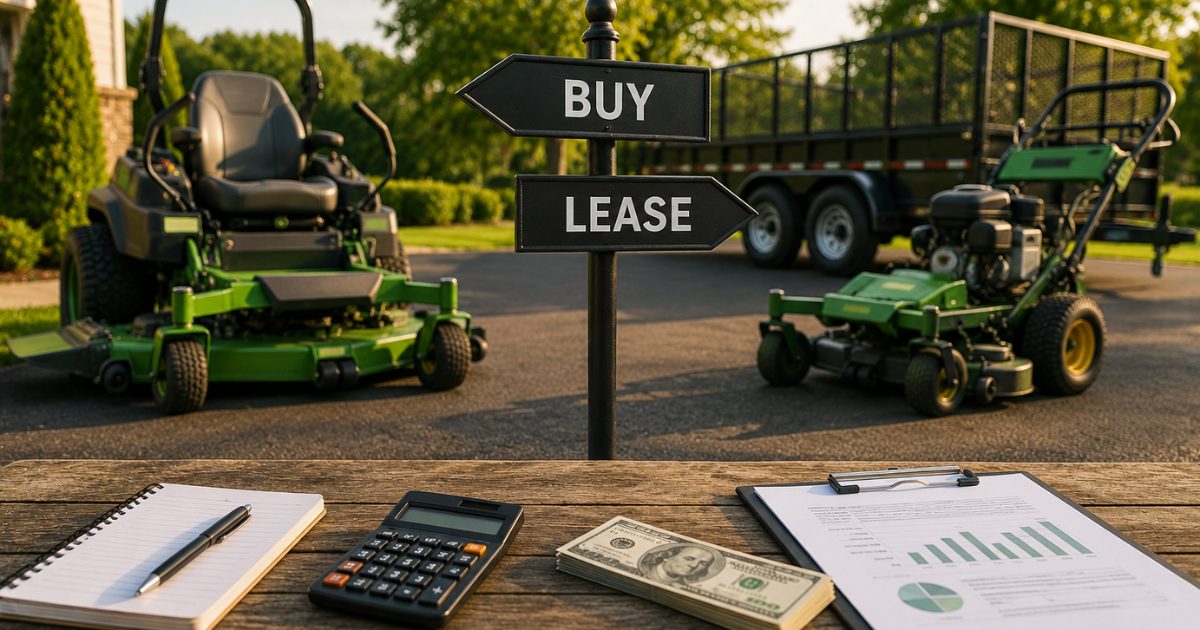
Whether you should buy or lease a piece of equipment comes down to one question: which option gets you the lowest total cost per hour of use, without straining your cash flow during the season you need the machine most.
The Real Cost of Owning
Buying outright — or financing — means you carry the full cost of the asset, plus maintenance, repairs, and depreciation. The upside: once it’s paid off, it’s yours, and you can often claim a large equipment tax deduction the year you buy it (talk to your CPA about what applies to your specific situation). The downside: a big cash outlay or loan payment that doesn’t care whether it’s a busy month or a rained-out one.
The Real Cost of Leasing
Leasing spreads the cost into smaller, predictable payments and often includes maintenance. That protects cash flow, especially for younger companies without a big reserve. The tradeoff: you’ll usually pay more over the life of the equipment, and you don’t build equity in something you can resell later.
What This Number Actually Tells You
Your daily and weekly revenue targets, not just monthly ones
How many mowing accounts, or how many crew-days, you need to stay above water
How much cushion — or lack of it — you’re carrying into your slow season
When Buying Wins
The equipment has a long useful life and low expected maintenance (skid steers, trucks you plan to run for years)
You have the cash reserve to absorb the purchase without touching your working capital
You want the depreciation deduction to offset a strong profit year
When Leasing Wins
You’re testing a new service line and aren’t sure the equipment will earn its keep long-term
Cash flow is tight and predictable monthly payments matter more than long-term cost
The equipment becomes outdated quickly (some mowers, tech-heavy attachments) and you’d rather upgrade every few years than own something aging
Quick Answers
Is leasing always more expensive than buying? Over the full life of the equipment, usually yes. But “more expensive” and “worse decision” aren’t the same thing if leasing keeps your cash flow healthy.
Does financing count as buying or leasing for this decision? Financing behaves like buying — you own the asset and take on debt — so run the same cash flow and reserve questions before signing.
How do I know if a piece of equipment is actually paying for itself? Compare the monthly payment (lease or loan) against the additional gross margin the equipment lets you generate. If the math doesn’t clear that bar, it’s a want, not a need — yet.
Not sure if your next equipment purchase makes sense for your numbers?
SHARE THIS
Have questions about our bookkeeping services
or fit for your business?
Grow Smarter with Expert Help

© Copyrights by The Lawn Care Books.
All Rights Reserved.
© Copyrights by The Lawn Care Books. All Rights Reserved.
Grow Smarter with Expert Help